
 (097) 870-51-96
  (097) 481- 42- 23
 (095) 792- 99 - 08
Heart disorders rank first in terms of incidence. This is due to the fact that treatment is slow and, at times, can continue throughout life. That is why, experts in the field of cardiology strongly recommend that you undergo heart examinations at least once a year.
Are the cardiologist and cardiac surgeon two different doctors or the same?
Correct answer: these are different professions. A cardiologist also treats heart disease. However, only a cardiac surgeon has the skills and experience to carry out surgery. He, as a rule, enters into battle only when there are no other ways to overcome the disease, and a real danger threatens a person's life.
How to recognize heart problems or when to see a specialist?
The reasons for visiting a cardiologist are:
If in the past you have already encountered cardiovascular diseases (for example, heart attack or stroke).
Pain in the chest area.
Dizziness, trouble coordinating, fainting;
High (140/90 mm Hg and above) or low blood pressure (below 105/65 mm Hg);
Cardiopalmus;
Interruptions in the work of the heart;
Shortness of breath, weakness, increased fatigue and difficulty tolerating physical activity;
Swelling of the lower extremities;
As a preventive measure, if you are over 45 years old.
Loud intermittent snoring, respiratory arrest during sleep.
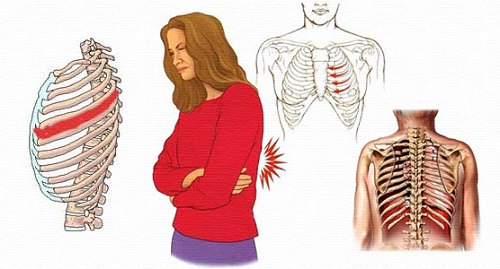
How to distinguish heart pain from neuralgia?
The main difference between a heart attack and neuralgia is its duration. Intercostal neuralgia attacks are quite prolonged. With neuralgia, chest pain persists for a long time, both day and night; the pain increases with a change in the position of the body in space, coughing and sneezing, deep inhalation and exhalation, sudden movements, with palpation or squeezing of the chest.
Heart pains are short-term; for example, an attack of angina pectoris lasts 5-10 minutes.
Are the cardiologist and cardiac surgeon two different doctors or the same?
Correct answer: these are different professions. A cardiologist also treats heart disease. However, only a cardiac surgeon has the skills and experience to carry out surgery. He, as a rule, enters into battle only when there are no other ways to overcome the disease, and a real danger threatens a person's life.
How to recognize heart problems or when to see a specialist?
The reasons for visiting a cardiologist are:
If in the past you have already encountered cardiovascular diseases (for example, heart attack or stroke).
Pain in the chest area.
Dizziness, trouble coordinating, fainting;
High (140/90 mm Hg and above) or low blood pressure (below 105/65 mm Hg);
Cardiopalmus;
Interruptions in the work of the heart;
Shortness of breath, weakness, increased fatigue and difficulty tolerating physical activity;
Swelling of the lower extremities;
As a preventive measure, if you are over 45 years old.
Loud intermittent snoring, respiratory arrest during sleep.
How to distinguish heart pain from neuralgia?
The main difference between a heart attack and neuralgia is its duration. Intercostal neuralgia attacks are quite prolonged. With neuralgia, chest pain persists for a long time, both day and night; the pain increases with a change in the position of the body in space, coughing and sneezing, deep inhalation and exhalation, sudden movements, with palpation or squeezing of the chest.
Heart pains are short-term; for example, an attack of angina pectoris lasts 5-10 minutes.
What examinations can be prescribed for the heart?
ECG
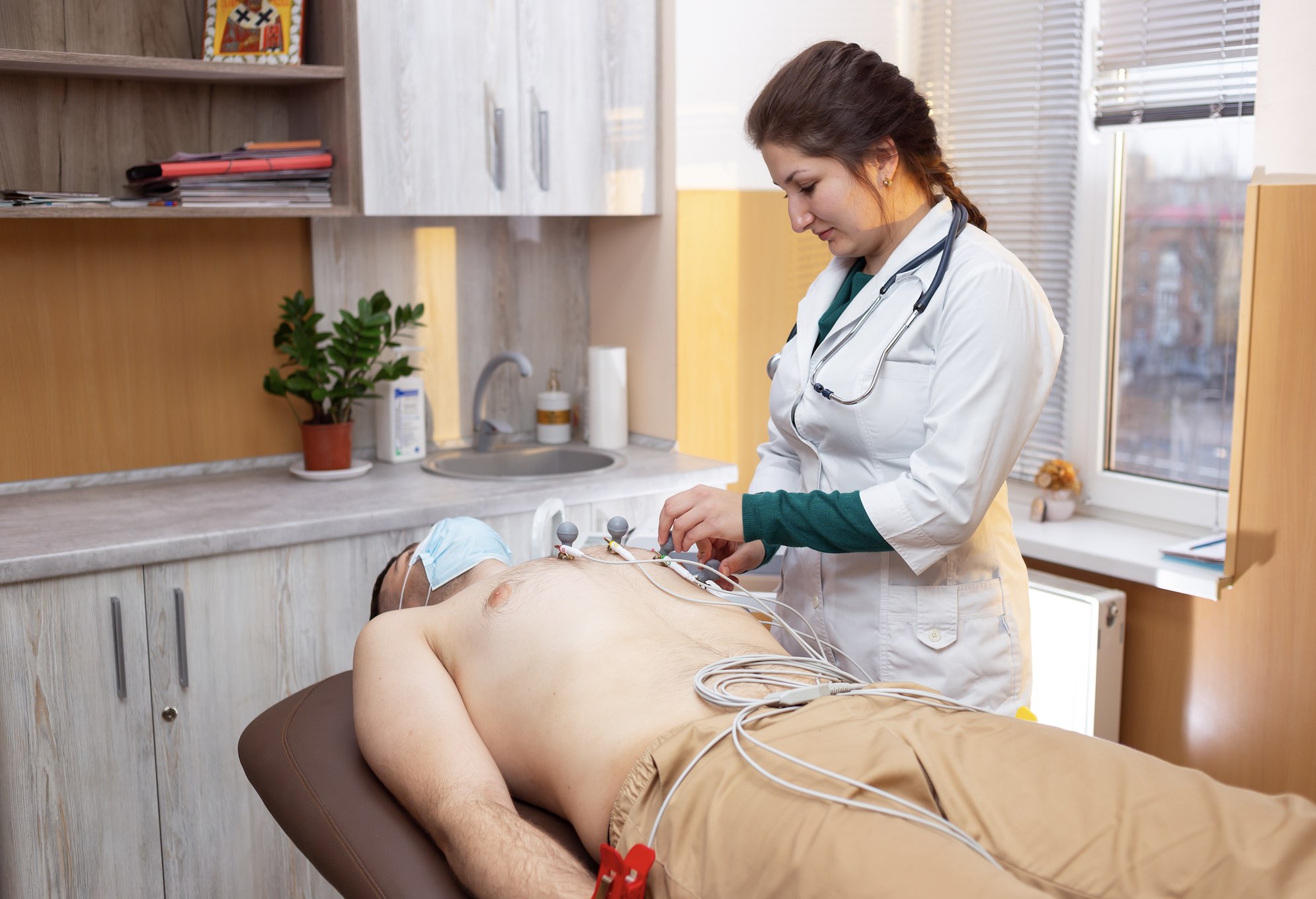
The two most well-known types of research that a doctor prescribes in the first place are an ECG (electrocardiogram) and an ultrasound of the heart. In the sequence - first an ECG, and if the decoding gives reason for suspicion or causes doubts in the doctor, he will send it for echocardiography. An electrocardiogram of the heart is a method of hardware research, where a device records data on the electrical activity of our heart. Decoding the ECG allows you to assess the regularity of the heart rhythm (too slow, normal, too fast, irregular), as well as the general condition of the heart muscle, the presence of certain unhealthy processes (with cardiomyopathy, myocardial infarction, pericarditis).
Ultrasound of the heart
Ultrasound of the heart is an informative and safe diagnostic method. The value of this method lies in the fact that it is able to determine the pathology of the heart muscle at the earliest stages, when the patient does not yet have any symptoms of heart disease. Ultrasound examination allows you to learn about the size of the heart, its layers, valves, about the features of blood circulation. It is prescribed for the above problems (chest pain, dizziness, problems with coordination, fainting, high (140/90 mm Hg and above) or low blood pressure (below 105/65 mm Hg) and others) ...
Holter monitoring
This method allows for many hours, up to 48 hours, ECG registration in a patient's usual environment (during the day - at home, at work, in transport, during rest) - without causing any inconvenience. Usually, this method is used after a regular ECG. The indications for it are unambiguous: it is necessary to determine the nature of disturbances in the rhythm of the heart.
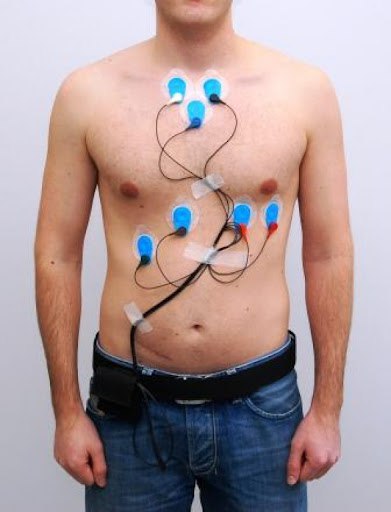
The Holter monitoring procedure is simple and safe. On the first day, the monitor is attached to the patient's chest. This takes about 10 minutes and does not require any special training. A special-purpose program that processes and decodes Holter data, provides analysis, and also helps in establishing most types of heart dysfunction, especially attacks of arrhythmias, angina pectoris and others.
The next day, the monitor is removed and the data is analyzed. If rare rhythm disturbances are found, this is the norm and there is no need to worry. In some cases, it is necessary to keep a diary in which you need to write down everything related to the work of the heart: to record physical activity, sleep time, food intake, medications, etc.
Coronary angiography
It is an almost painless procedure performed under local anesthesia. To "approach" the vessel, the cardiac surgeon makes a small incision. The patient is awake, doctors comment on their work and communicate with him to reduce stress levels. The level of radiation during its implementation does not pose a threat to the body. Thanks to the contrast agent and X-ray control, surgeons receive a clear and detailed picture of the coronary arteries.
Coronary angiography is indicated if there is a suspicion or presence of significant narrowing of the coronary vessels (stenosis), which often manifests itself in the form of angina pectoris.
Stentan not
In most cases, in the presence of significant stenosis of the coronary vessel, a stent is placed. Stenting is the final, final stage to restore blood flow in the vessels of the heart. Initially, before stenting, diagnostic coronary angiography (examination of the heart vessels by introducing contrast into their lumen) and angioplasty (mechanical crushing of cholesterol plaque in the heart vessels) are performed.
A stent is a small metal structure in the form of a spring ("mesh"), which is installed in the lumen of the heart vessel once and for all. It is introduced into the affected vessel and, expanding, is pressed into its walls, increasing its lumen. This improves the blood supply to the heart.
All four types of research are completely safe. But even if you have understood the information quite thoroughly, only a doctor can select a diagnosis and analyze the results. In our clinic, our specialists will answer all cardiac questions - Davydyuk Maxim Andreevich - cardiac surgeon, Davidyuk Natalya Ivanovna - cardiologist.


ADVANTAGES OF A HEART EXAMINATION IN MARUSICH
The comprehensive examination program at the Marusich clinic allows you to undergo examination by a cardiologist and a cardiac surgeon with a minimum amount of time and in the most comfortable environment for you. There is no need to go from hospital to hospital, from specialist to specialist.
The first appointment is with our cardiologist Davydyuk Natalie Ivanovna. She will give professional advice on the results of the examination, explain the data obtained during the study, and make a conclusion about the presence or absence of pathology from the heart and the entire vascular system. Also, there are diagnoses that require surgical intervention, here surgeon Davydyuk Maxim Andreevich comes to the aid of Natalya Ivanovna.
As a result, specialists will help you get back to normal life. At the end of your treatment, you will receive personalized advice on how to stay stable in the long term.
